
Multi-Platform CI/CD Pipeline
An automated CI/CD system that builds, tests, packages, and releases embedded software across eight hardware platforms from a single codebase.
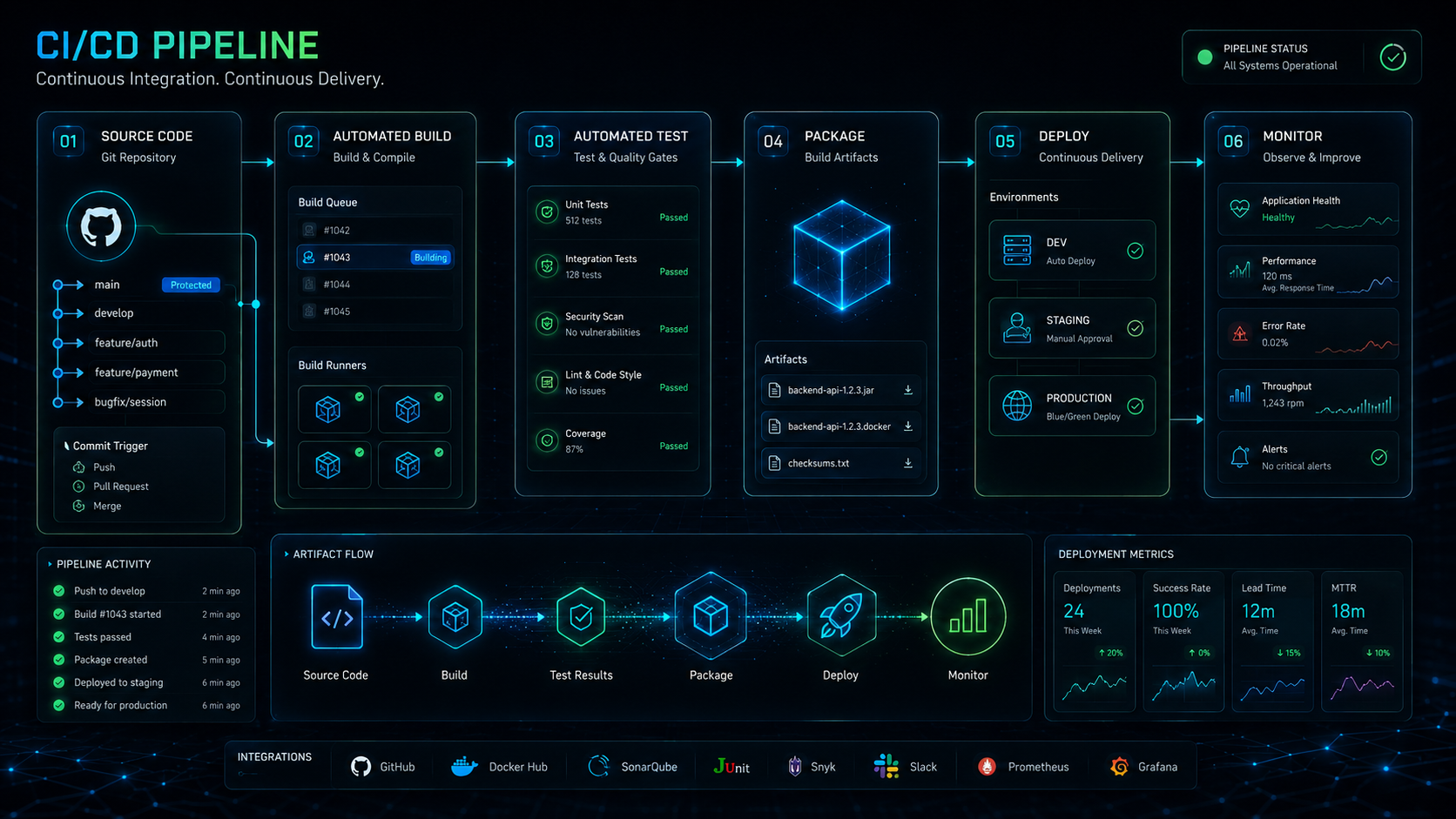
The project involved engineering a complete continuous integration and delivery system for software deployed across multiple generations of embedded IoT controllers.
A single source code release needed to produce validated packages for eight hardware platforms spanning ARM, x86, and aarch64 architectures, while supporting multiple operating system generations and packaging formats.
The pipeline automates the full release lifecycle including source preparation, code obfuscation, cross-platform compilation, integration testing on physical hardware, artifact publishing, and downstream build-system updates.
The main challenge was producing reliable native software packages for eight different hardware environments from a single source code repository.
Native Node.js dependencies needed to be compiled against the correct processor architecture, system libraries, and runtime versions for every target controller.
Software quality could not be validated through simulated environments alone. Releases needed to be deployed and tested on actual embedded controllers before publication.
The release process also involved several connected systems, including artifact storage, Yocto build recipes, firmware metadata, secrets management, static analysis, and both legacy Jenkins and modern GitHub Actions infrastructure.
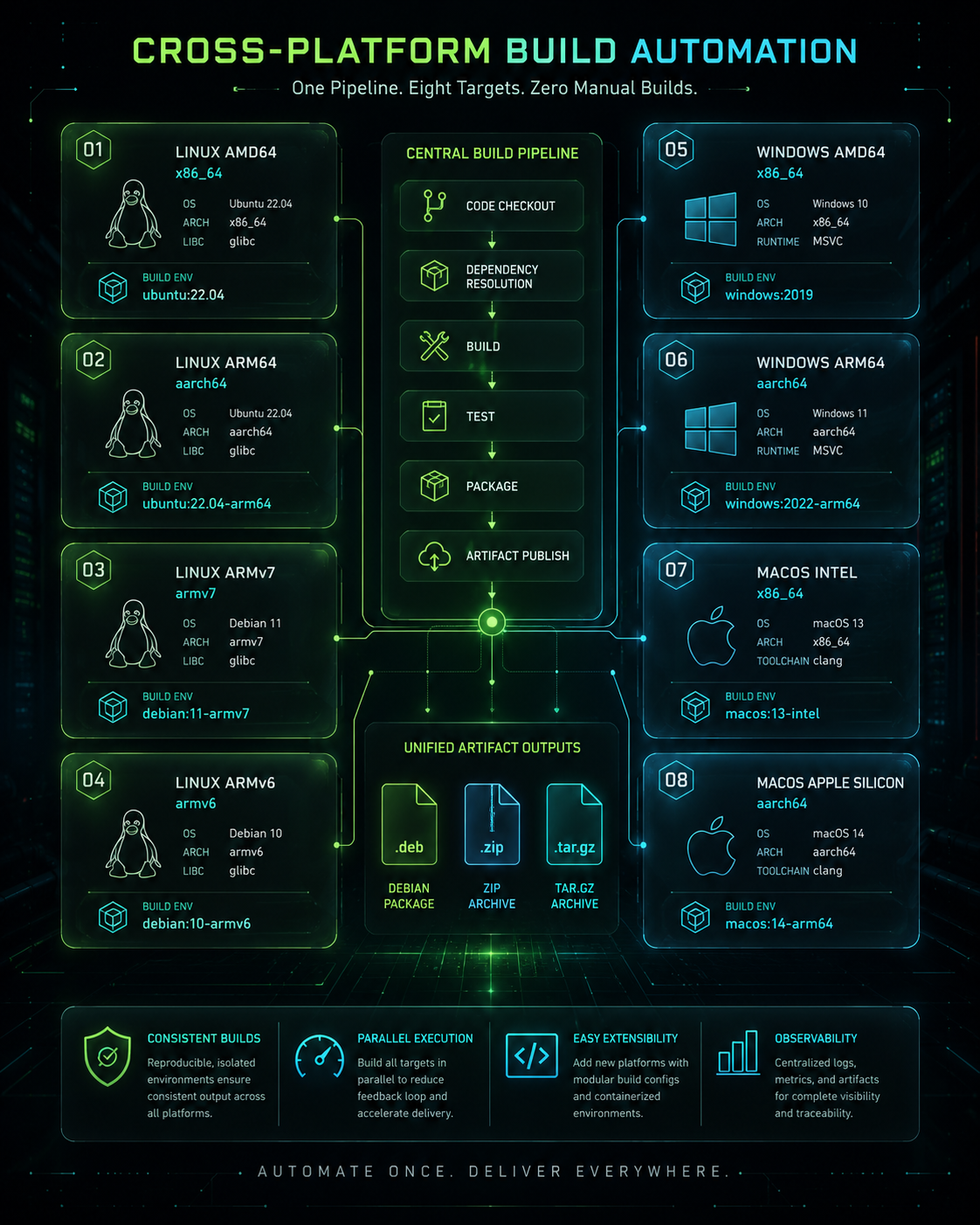
A matrix-based CI/CD architecture was implemented to run platform-specific builds in parallel using Docker environments configured with the exact toolchains and dependencies required by each target.
GitHub Actions and Jenkins pipelines were maintained in parallel during the infrastructure migration, allowing delivery to continue without interrupting the existing release process.
Automated integration testing deploys newly built packages to physical test controllers through SSH, executes validation suites, and captures diagnostic snapshots when failures occur.
Release artifacts are automatically published to JFrog Artifactory, while HashiCorp Vault provides secure access to deployment credentials, SSH keys, and API tokens.
Additional automation handles JavaScript obfuscation, SonarQube analysis, calendar-based versioning, packaging, and downstream Yocto source revision updates.
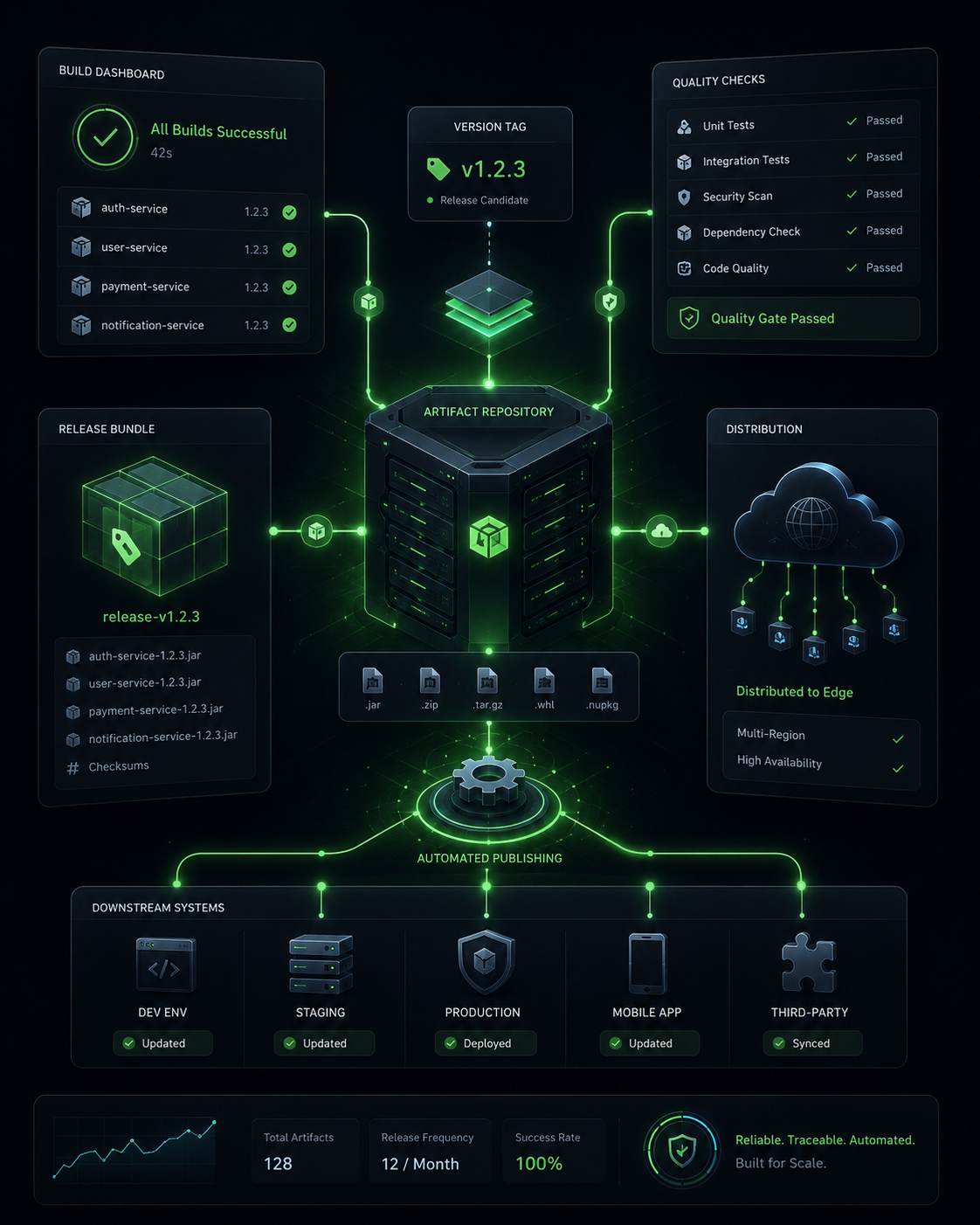
The final pipeline transformed a complex multi-platform release process into a repeatable automated workflow capable of producing software for eight target environments from a single trigger.
Parallel matrix builds reduce release time while automated hardware testing catches platform-specific problems before software reaches production.
Artifact publishing, secrets management, static analysis, packaging, and downstream build updates are coordinated as part of the same release workflow.
The system also allows the organization to migrate gradually from Jenkins to GitHub Actions while maintaining continuous delivery throughout the transition.